For decades, the cholesterol conversation has centered on a single number: LDL. Yet a growing body of lipidology suggests that the concentration of cholesterol in the blood may matter less than the count of particles carrying it. That count has a name — ApoB — and understanding it reframes how cardiovascular risk is estimated, why some people with reassuring results still develop disease, and what everyday habits genuinely move.
Most people who have had a routine check-up can recite a version of their cholesterol results. There is the "bad" cholesterol, LDL, which should be low, and the "good" cholesterol, HDL, which should be higher. This shorthand has done a great deal of public good, and it remains a useful starting point. But it is a simplification of a more intricate biological story, and the simplification occasionally hides risk in plain sight.
Cardiologists and lipid specialists have increasingly turned their attention to a marker that captures something the standard LDL number cannot: not how much cholesterol is being carried through the bloodstream, but how many particles are doing the carrying. This article explains what ApoB is, why particle count can matter as much as cholesterol concentration, and how the daily inputs that shape cardiovascular health — movement, sleep, and cardiovascular trends — become visible over time.
1. Cholesterol Does Not Travel Alone
Cholesterol is a waxy, fat-like substance essential to life. It builds cell membranes, forms the backbone of several hormones, and helps the body produce vitamin D and bile acids. The difficulty is logistical: cholesterol and other fats do not dissolve in blood, which is largely water. To move through the circulation, they must be packaged.
That packaging is the lipoprotein — a spherical particle with a fatty core and a protein-and-phospholipid shell that allows it to travel through the watery bloodstream. LDL, HDL, VLDL and others are not different kinds of cholesterol; they are different kinds of delivery vehicles, each carrying cholesterol and triglycerides to and from tissues. When a lab reports "LDL cholesterol," it is estimating the amount of cholesterol riding inside one class of these vehicles.
The role of the protein shell
Each of the potentially artery-damaging particles — LDL, VLDL, and a few related forms — carries exactly one copy of a structural protein called apolipoprotein B, or ApoB. Because the ratio is one protein per particle, measuring ApoB effectively counts the particles rather than weighing their contents. It is the difference between asking how much cargo a fleet is carrying and asking how many trucks are on the road.
2. What ApoB Actually Measures
An ApoB blood test returns a single figure that represents the total number of atherogenic — that is, plaque-promoting — particles in circulation. Every LDL particle carries one ApoB, and so do the triglyceride-rich particles that often rise with metabolic dysfunction. Summed together, these account for the overwhelming majority of the particles capable of lodging in an artery wall.
The distinction from standard LDL cholesterol is subtle but consequential. LDL cholesterol tells you the mass of cholesterol inside your LDL particles. ApoB tells you how many particles there are. Two people can carry the same amount of cholesterol distributed very differently: one in a smaller number of large, cholesterol-rich particles, another in a larger number of small, cholesterol-poor ones. The second person has more particles — a higher ApoB — and, according to the prevailing model of atherosclerosis, a higher burden of risk.
The central insight is deceptively simple. It is not primarily the cholesterol dissolved in your blood that initiates arterial disease, but the particles that ferry it — and each of those particles is marked by one molecule of ApoB.
3. How Particles Build Plaque
Atherosclerosis, the slow narrowing and stiffening of arteries, begins when ApoB-containing particles cross from the bloodstream into the wall of an artery. Smaller particles appear to penetrate the arterial lining more readily, and once inside, they can become trapped, oxidised and engulfed by immune cells. Over years, this accumulation forms the fatty deposits known as plaque.
What drives this process is, in large part, a numbers game. The more ApoB particles circulating, the greater the statistical likelihood that some will enter and become retained in the artery wall. This is the mechanistic reason particle count draws so much attention: it maps more directly onto the initiating event of the disease than the cholesterol concentration alone.
Plaque itself is not inherently catastrophic; many people carry stable deposits for decades. The danger arises when a plaque ruptures, prompting a clot that can block blood flow to the heart or brain. Reducing the particle burden over a lifetime is understood to slow the accumulation that makes such events more likely.
4. The Discordance Problem
The most compelling argument for looking beyond LDL concentration is a phenomenon lipid specialists call discordance: cases where the standard LDL number and the particle count point in different directions. A person can have an LDL cholesterol result comfortably within the "normal" range while carrying an elevated number of particles — and therefore a risk that the standard panel understates.
When "normal" is misleading
This discordance is not rare, and it is especially common in people with metabolic conditions such as insulin resistance, type 2 diabetes, or elevated triglycerides. These conditions tend to produce many small, cholesterol-depleted LDL particles. Because each particle holds less cholesterol, the LDL number can look reassuring even as the particle count climbs. The cholesterol test is measuring the cargo and missing the count of trucks.
In such cases, ApoB — or a related measure, non-HDL cholesterol — can reveal risk that a conventional LDL reading obscures. This is precisely why several professional guidelines now recognise ApoB as a valuable marker, particularly for people whose standard results seem at odds with their broader health picture.
A "normal" LDL result is genuinely reassuring for many people. But for those with metabolic risk factors, it can offer a false sense of security — the particle count may tell a different, more accurate story.
5. Why Particle Count Can Reflect Risk More Faithfully
When researchers have compared markers head to head in large population studies, ApoB has repeatedly performed as well as, and often better than, LDL cholesterol at reflecting cardiovascular risk. The consistency of this finding is what has moved particle count from a niche research interest toward mainstream clinical relevance.
The logic follows from the biology. If arterial disease begins with particles entering the artery wall, then a measure that counts those particles should track the disease process more closely than one that estimates their combined cholesterol content. ApoB does not replace clinical judgement or the broader risk assessment a physician performs — age, blood pressure, family history and other factors all matter — but it adds a dimension the standard lipid panel can miss.
6. Diet, Exercise, Sleep and Genetics
Particle count is not fixed at birth, but neither is it fully within anyone's control. Genetics exert a powerful influence: some inherited conditions raise ApoB substantially regardless of lifestyle, and a family history of early heart disease is a meaningful signal to take seriously. For these individuals, professional evaluation is especially important, because lifestyle alone may not be sufficient.
What lifestyle can influence
For most people, however, everyday habits shape the metabolic environment in which particles are produced and cleared. Diets lower in refined carbohydrates and certain saturated fats, and richer in fibre, tend to be associated with more favourable lipid profiles. Regular physical activity influences how the body handles triglycerides and can support healthier particle patterns. Adequate, consistent sleep and moderated alcohol intake play supporting roles, largely through their effect on metabolic health.
None of these levers act on ApoB in isolation, and none guarantee a particular result. They operate together, over long periods, as part of the same metabolic system that governs weight, blood sugar and blood pressure. This is why cardiovascular health is best understood as a pattern of inputs sustained over years rather than any single intervention.
7. What Wearables Can and Cannot See
It is important to be precise here. ApoB cannot be measured by a wristband, a ring, or any consumer wearable. It requires a blood sample and laboratory analysis, and its interpretation belongs with a qualified clinician who can place the result alongside your full risk profile. No device on the market changes that.
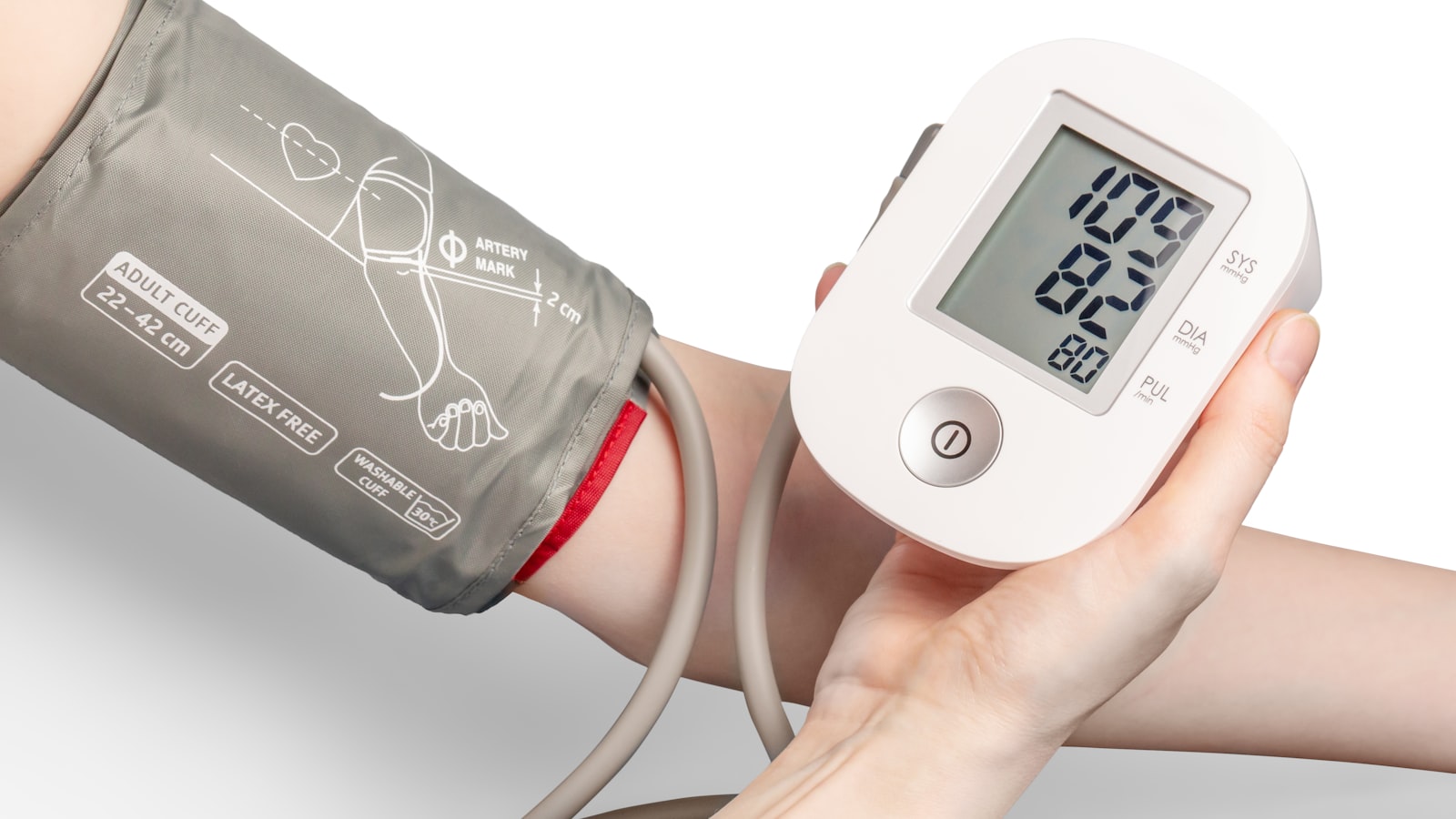
What wearables can track are the daily lifestyle signals that influence the metabolic terrain in which particle count is shaped. Physical activity and movement volume, resting heart rate, cardiovascular trends relevant to blood pressure, and the duration and consistency of sleep are all measurable, and all connect — indirectly — to the habits that matter for long-term cardiovascular health.
The value of a baseline
The usefulness of such data lies less in any single reading than in the trend. A resting heart rate that drifts over months, or sleep that grows steadily more fragmented, is more informative than an isolated measurement. It is here that continuous tracking earns its place: Aura Clarus is designed to build a longitudinal baseline from these daily signals, so that gradual shifts become visible against your own history rather than a generic norm.
That baseline is context, not diagnosis. It can help a person notice when their habits are moving in a helpful or unhelpful direction, and it can make a conversation with a clinician more grounded. It cannot substitute for the blood panel that measures ApoB, and it is not intended to.
8. Putting It Together
The shift from LDL concentration toward particle count is not a rejection of everything that came before. LDL cholesterol remains a useful and widely available marker, and for many people it tells a consistent story. The argument for ApoB is that it can refine the picture, catch the discordant cases, and connect more directly to the biology of how arteries actually accumulate disease.
For the individual, the practical takeaways are modest and durable. Understand that cholesterol travels in particles, and that the count of those particles is a meaningful quantity. Recognise that a "normal" LDL result does not always tell the whole story, particularly in the presence of metabolic risk factors. Sustain the lifestyle patterns — movement, sleep, sensible eating — that shape the metabolic system over time. And when it comes to the numbers that require a blood test, defer to a proper panel and a professional who can interpret it in context.
Wearable data has a genuine but bounded role in this. It cannot measure ApoB, and it should never be mistaken for a diagnostic tool. What it can do is make the slow, daily inputs of cardiovascular health legible over time, so that the patterns you cannot feel become patterns you can see — and act on, in partnership with the professionals equipped to guide you.
This article is published by Adarna Inc. for educational and informational purposes only. It does not constitute medical advice. Consult a qualified healthcare professional before making any health-related decisions.