It is the most measured number in medicine and one of the least understood. Blood pressure sits at the intersection of everything — the heart's rhythm, the kidneys' chemistry, the stiffness of the arteries themselves — yet for most people it remains an abstraction, a pair of figures glanced at once a year. The quiet truth is that high blood pressure damages the body for years before it announces itself, which is precisely why it earned its name: the silent killer.
Every time the heart contracts, it sends a pulse of blood surging into the arteries. The force that pulse exerts against the arterial walls is blood pressure, and it is never a single value. It rises with each heartbeat and falls between beats, climbs when you stand or worry, and settles when you sleep. To capture this living signal, clinicians record two numbers — the peak and the trough — in millimetres of mercury, the unit inherited from the glass columns that first measured it.
What makes blood pressure so consequential is that the arteries are not passive pipes. They are dynamic, muscular tissues that age in direct proportion to the pressure they endure. Sustained high pressure does not merely coexist with disease; it manufactures it, slowly remodelling the vessels, the heart, and the organs they feed. Learning to watch that process rather than ignore it is among the highest-leverage things anyone can do for their long-term health.
1. What the Two Numbers Actually Mean
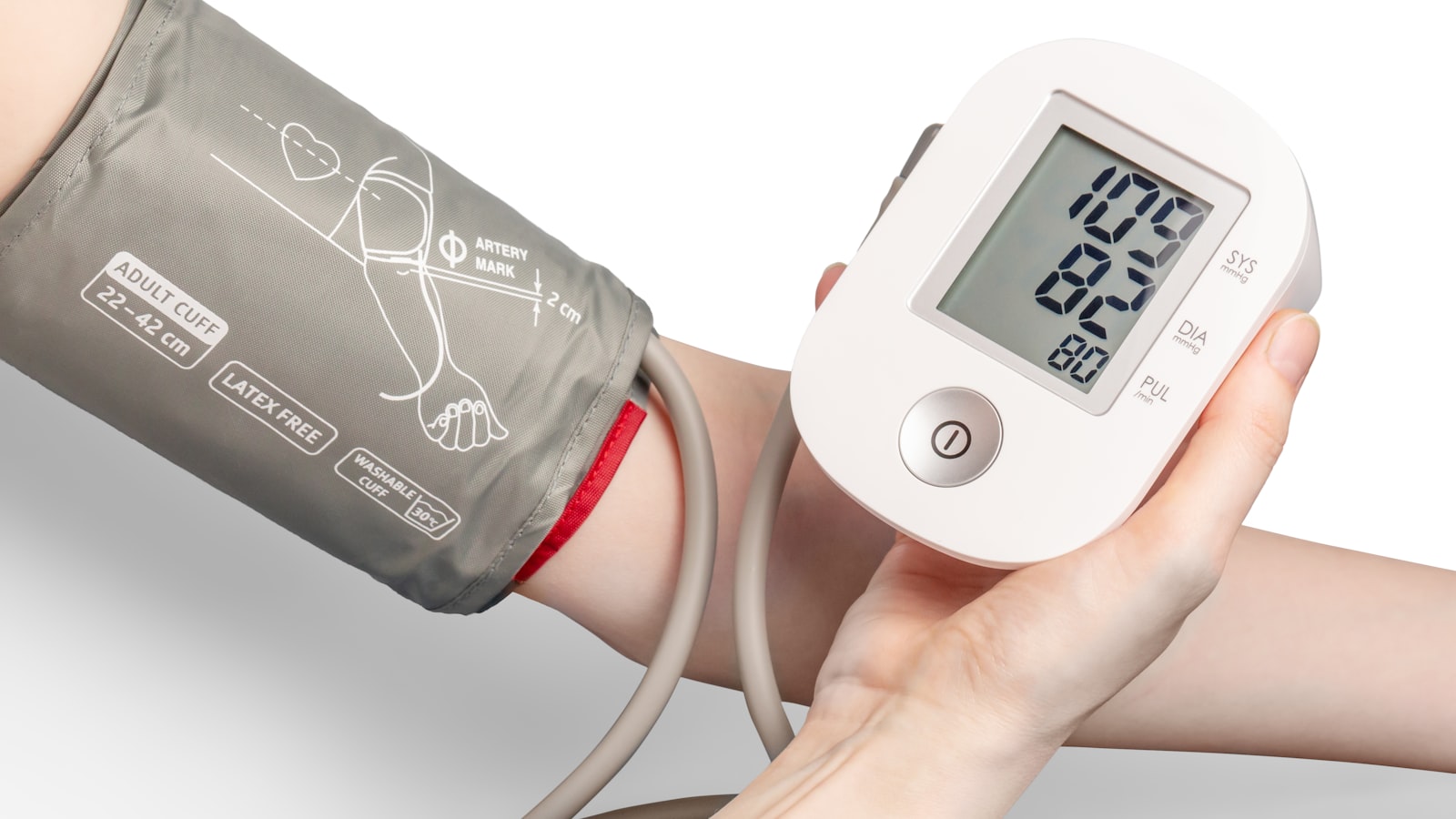
A reading is written as one number over another, such as 118/76 mmHg, and each figure describes a distinct phase of the cardiac cycle. The first and higher number is systolic pressure — the peak force in the arteries the instant the heart's left ventricle contracts and ejects blood. The second and lower number is diastolic pressure — the resting force that remains between beats, while the heart relaxes and refills.
Both numbers matter, but they tell different stories. Diastolic pressure reflects baseline resistance in the smaller arteries and tends to dominate risk in younger adults. Systolic pressure reflects how forcefully the heart pumps and how stiff the large arteries have become — and it becomes the stronger predictor of risk with age, as arterial walls lose their elasticity.
Why one reading is rarely the whole picture
Blood pressure is exquisitely sensitive to context. A full bladder, a cup of coffee, a rushed conversation, or the simple anxiety of a clinic visit can each push a reading up by ten to twenty points or more — an effect so common it has a name, white-coat hypertension. It is one reason a single measurement, treated as a verdict, can mislead. Pressure is a distribution, not a point.
2. The Stages, From Normal to Stage 2
Current guidelines from the American College of Cardiology and the American Heart Association divide adult blood pressure into clear categories, each marking a meaningful step in risk. The thresholds are not arbitrary; they reflect large studies linking specific pressure ranges to measurable increases in heart attack, stroke, and kidney disease.
- Normal — below 120 systolic and below 80 diastolic. The arteries are working under healthy load, and risk is at its baseline.
- Elevated — 120 to 129 systolic and below 80 diastolic. Not yet hypertension, but a clear signal that pressure is trending the wrong way and that lifestyle changes are worth starting now.
- Hypertension — Stage 1 begins at 130 to 139 systolic or 80 to 89 diastolic; Stage 2 at 140 or above systolic, or 90 or above diastolic. These are the ranges where intervention, often including medication, meaningfully changes long-term outcomes.
One important nuance: when the two readings fall into different categories, the higher one determines the classification — a reading of 135/78 is Stage 1 hypertension on its systolic value alone. And a reading at or above roughly 180/120 is treated as a hypertensive crisis, warranting immediate medical attention rather than watchful waiting.
1.3B
adults worldwide living with hypertension
~46%
unaware they have it
120/80
mmHg upper edge of normal
3. Why It Is Called the Silent Killer
The cruelty of hypertension is that it rarely hurts. There is no reliable headache, no dizziness, no flushed face that announces dangerous pressure — those symptoms, when they appear at all, tend to arrive only at extreme levels. For the years and often decades during which moderately high pressure does its damage, most people feel completely well. The disease advances in silence, and the first symptom is often the event it caused.
That damage is mechanical and relentless. Persistently high pressure forces the arterial walls to thicken and stiffen, accelerating atherosclerosis — the buildup of plaque that narrows vessels and sets the stage for clots. The heart, pumping against constant resistance, thickens its left ventricle until that overworked muscle begins to fail. The delicate vessels of the kidneys scar, eroding their ability to filter. And in the brain, the same pressure that ruptures or blocks small vessels drives both stroke and, over time, vascular cognitive decline. Cardiologists call this "target organ damage" — proof that blood pressure is never just a number on the arm, but a load distributed silently across the body's most vital tissues.
High blood pressure is the single largest modifiable risk factor for cardiovascular death worldwide — and for most of its course, it produces no symptoms at all. The absence of a warning is the warning.
4. The Real Stakes: Heart and Stroke Risk
The relationship between blood pressure and cardiovascular risk is among the most consistent findings in medicine: across large populations, risk rises steadily and continuously with pressure, with no comfortable plateau. Landmark analyses show that, throughout the normal-to-high range, each increment of roughly 20 mmHg systolic or 10 mmHg diastolic is associated with approximately a doubling of the risk of death from heart disease and stroke.
The encouraging mirror image is that the relationship runs both ways. Clinical trials have repeatedly shown that reducing systolic pressure by even 10 mmHg meaningfully cuts the incidence of stroke, heart attack, heart failure, and premature death — rare protection for so modest a change in a single number.
Relative Cardiovascular Risk Across Blood Pressure Categories
Illustrative relative risk of major cardiovascular events; risk rises continuously with pressure, with no safe threshold for "a little high."
5. How Cuffless Wearables Estimate Pressure
For more than a century, measuring blood pressure has meant wrapping a cuff around the arm, inflating it to squeeze the brachial artery shut, and listening as it deflates. That method remains the clinical reference standard — but it is intermittent by nature, capturing one moment, often under the very conditions that distort it. The promise of wearable technology is different: to estimate pressure continuously, passively, in the rhythm of ordinary life.
Pulse transit time and the PPG waveform
Most cuffless approaches rest on a clever piece of physiology. When the heart beats, the resulting pressure wave travels through the arteries at a speed that depends on how stiff and how pressurised they are — higher pressure makes the wave travel faster. By measuring the tiny delay between the heartbeat and the wave's arrival at a distant point, a device can infer pulse transit time, which correlates with blood pressure. Wearables capture this using photoplethysmography, or PPG: the same green and infrared optical sensors that read your pulse shine light into the skin and measure subtle changes in blood volume with each beat. The precise shape of that waveform — its rise, its peaks, its reflected echoes — carries surprising information about arterial stiffness and pressure.
Modern systems pair these signals with machine-learning models trained on large datasets, translating waveform features into pressure estimates — a discreet, wearable sensor offering a running estimate of blood pressure without ever inflating a cuff, something unthinkable a generation ago.
The honest limits of the technology
Enthusiasm must be tempered with candour. Cuffless estimation is a genuinely hard problem, and the current generation of consumer technology is not a replacement for a validated cuff. The optical signal that makes it possible is also what makes it fragile — PPG is sensitive to skin tone, temperature, motion, and fit. The deeper challenge is calibration: most cuffless methods estimate pressure relative to a known reference and require periodic recalibration against a cuff to stay accurate. Without it, estimates drift, and they are least reliable at the extremes — precisely the readings that matter most. Most consumer devices today are therefore positioned for wellness and trend awareness rather than diagnosis. None of this diminishes the approach; it reframes it. The point of a wearable is not to rival the cuff on any single number, but to do what the cuff cannot: watch the pattern, continuously, over weeks and months.
6. Why Trends Beat Single Readings
A single reading is a snapshot of one moment under one set of conditions. It cannot tell you whether your pressure climbs sharply with morning stress, dips appropriately during sleep, or has crept upward over the past year. Yet these patterns are often more revealing than any isolated value. The natural overnight fall in pressure, known as nocturnal dipping, is itself an important marker — people whose pressure fails to dip at night carry higher cardiovascular risk, and that pattern is invisible to a once-a-year clinic measurement.
This is the central case for continuous monitoring. Where a cuff offers a handful of disconnected dots across a lifetime, a trend reveals the trajectory — the slope that matters far more than any single point. A pressure of 128 means one thing if it has held steady for years and quite another if it has climbed from 112 over eighteen months. Trends turn raw numbers into context.
A single reading tells you where you are today. A trend tells you where you are heading — and in blood pressure, direction is destiny.
7. The Levers Within Your Control
For all its danger, blood pressure is among the most modifiable risks in medicine, and the levers compound when combined. The most powerful is dietary sodium: most people consume far more salt than the body needs, and cutting back can lower systolic pressure by several millimetres of mercury on its own. Eating patterns rich in potassium, vegetables, and whole foods — the DASH approach is best studied — amplify the effect.
Movement matters just as much. Regular aerobic exercise, on the order of 150 minutes a week, can lower systolic pressure by roughly 5 to 8 mmHg, comparable to some medications. A healthy weight, limited alcohol, and not smoking each add benefit. So does sleep: poor or shortened sleep, and untreated sleep apnoea in particular, drive pressure upward, while restorative sleep allows the natural nocturnal dip to do its protective work.
The role of stress
While a stressful moment raises pressure only transiently, sustained stress contributes to lasting hypertension through persistent activation of the body's fight-or-flight machinery. Practices that calm the nervous system — slow breathing, mindfulness, time outdoors, genuine rest — are not soft adjuncts but legitimate tools with measurable effects.
8. From Measurement to Awareness
The shift now underway in health is from the reactive to the proactive — from waiting for the event to watching for the drift that precedes it. Blood pressure is the ideal proving ground, because its damage is so silent and its trajectory so trackable. The value of continuous monitoring is not alarm; it is awareness, the quiet accumulation of knowledge about your own patterns before they become problems.
This is the spirit in which a wearable such as Aura Clarus approaches the metric. Rather than promising a diagnosis from the wrist, the aim is to surface trends — how pressure moves across the day, how it behaves during sleep, how it shifts over weeks as habits change — in a way that complements the validated cuff and the clinician's judgement rather than replacing them. Seen this way, the device becomes less a measuring instrument than a mirror, turning a number once glanced at annually into a story you can actually follow.
Blood pressure has been called the silent killer for good reason, but silence is only dangerous when no one is listening. The arteries have been telling their story all along, in a language of pressure and pulse — and the opportunity of this moment is simply to begin paying attention, patiently and early enough for the knowing to matter.
This article is published by Adarna Inc. for educational and informational purposes only. It does not constitute medical advice. Consult a qualified healthcare professional before making any health-related decisions.