Adarna Inc. received its US tax ID, opened a US bank account, went live on Stripe and filed BE-13.
Download PDFOctober was the month Adarna Inc. became ready to operate in the United States. On 8 October the IRS issued the company's US tax ID, its EIN, through Stripe Atlas, the number every bank, payment provider and government office asks for first. With it in hand, Stripe payments went live for Adarna Inc. on 10 October, and on 19 October we opened a Mercury business account with checking and savings, giving the company its own US banking for the first time. We also filed our first US government form, the BE-13 Claim for Exemption, the Bureau of Economic Analysis survey of foreign-owned companies, on 14 October, four weeks ahead of its deadline. Finally, we decided that the founders will pay for their shares in Adarna Inc. in cash rather than with intellectual property, which lets the Indian banks process the overseas investment filing cleanly. Together these steps move Adarna from a newly formed company to one that can bank, take payments and report like any other US business, and the full details are in the company update available to download here.
A Tamil Nadu Innovation Voucher grant funds five Aura Clarus prototypes, and the family investment is finalised.
Download PDFThis month brought our first government grant. IBT Aura Private Limited, our company in India, received Voucher A of the Tamil Nadu Innovation Voucher Programme, run by EDII-TN with the iTNT Foundation as our knowledge partner. The voucher contributes ₹3,00,000 towards a ₹3,33,333 project, with the remaining ten percent from us, and it pays for exactly the work in front of us: five working Aura Clarus prototypes and their testing. On 28 October we sent the programme the detailed milestones and budget split it asked for, covering six months from November 2026 to April 2027, from receiving and testing the frames, boards and glass, to building five textile bands and units, to an ECG test with ten volunteers and the final report. Alongside the grant, the family investment agreement was rewritten for Adarna Inc. under Delaware law and finalised on 17 October at $6,000. With the prototypes funded and the family investment in place, the next six months of hardware work have both a plan and the money behind it, and the funding update available here sets out every milestone.
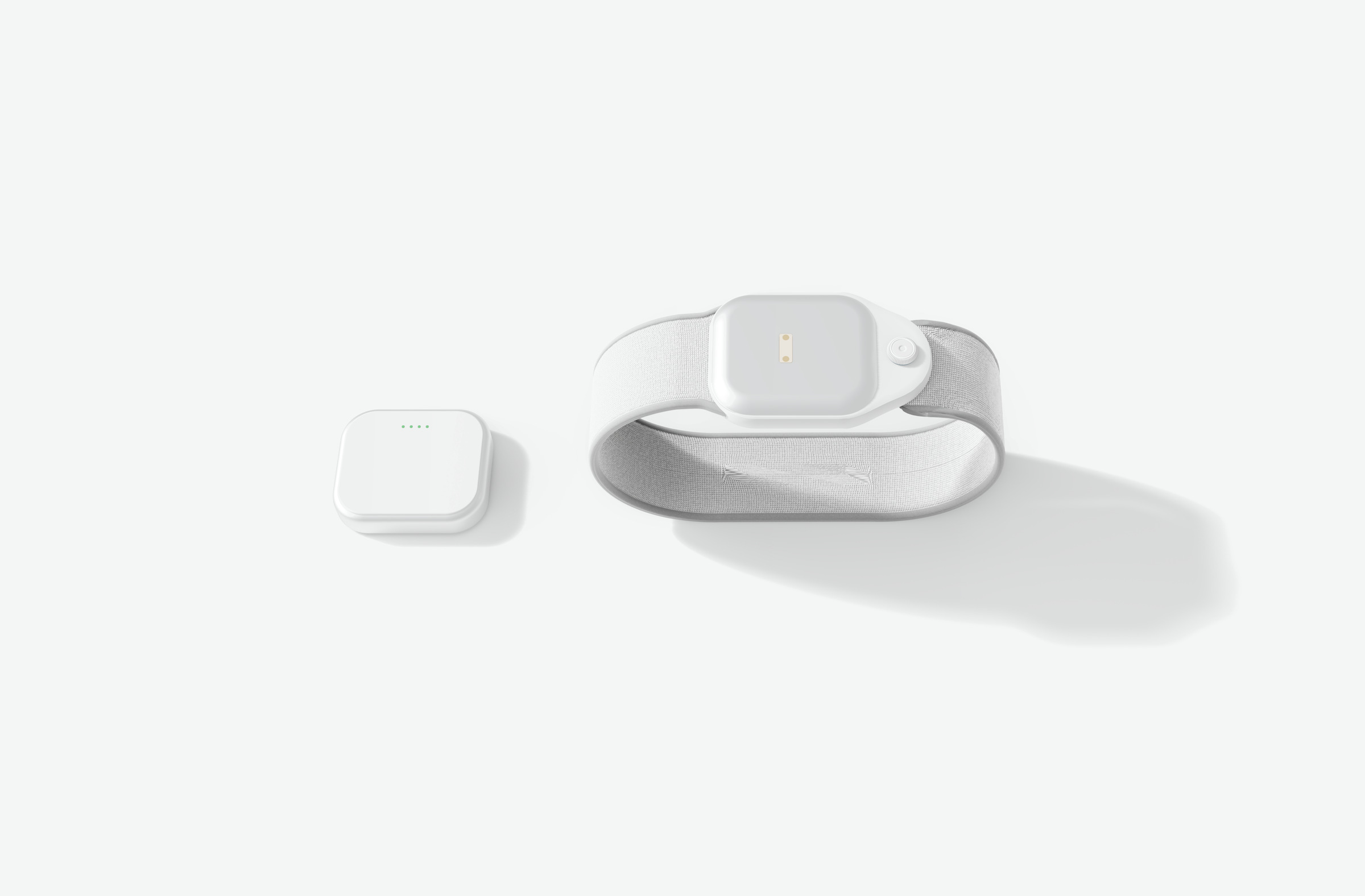
Every part of the first Aura Clarus is now made or being made. On 27 October WayKen finished all five sets of the aluminium frame, each checked against our drawings with its own inspection report, and packed them together in a single box; they will ship as one consignment as soon as our bank clears the import approval. The optical cover glass and sensor pads for the same five sets were paid for on 7 October, and on 16 October we sent the glass maker its cutting files together with answers to its drawing questions. The main board moved into production too: on 22 October we checked Hitech's panel files against our released design, all ten layers and fifteen boards, and approved them, and Hitech has confirmed the boards will ship on 23 November, with the first board photographed and checked before the rest are built. We also settled how the battery is protected, on a small 0.6 mm add-on board, so the main board needs no revision. With frames, glass and boards converging, the first complete Aura Clarus units are close.
A cited research report now shapes the app's features, its parameters and how its scores are weighted.
Download PDFAura Clarus now starts from the evidence. In October we completed a research report on what drives thinking performance and how to maintain it, focused on lifestyle factors: about 38,000 words, with every claim cited, around 450 PubMed-indexed papers, and graded by the strength of its evidence. We then turned the report into a 631-row evidence sheet that links each finding to a decision in the app, from the size of the effect and how long it takes to the feature that uses it, and checked the existing Mac app against it item by item, 839 items in all. The parameter set grew to 349, with 42 evidence-based parameters added and 34 duplicates removed. Most visibly, the morning Capacity score was rebuilt so that the three-minute Quick check carries 40 percent, sleep debt 24 percent and last night's sleep 14 percent, while recovery is measured from the band, led by heart-rate variability. Our rule is simple: show everything the band measures, and claim only what the science supports. The science update available here explains each change.
All 61 desktop features now run in ten cloud services on AWS, tested end to end against live servers.
Download PDFThe software behind Aura Clarus took its biggest step yet. Early in the month we laid a new cloud foundation on AWS, with email-code sign-in and the engines for capacity, focus music, band metrics and live data. On top of it, every one of the 61 desktop features was built into ten services, each owning one kind of data: Identity, Task, Calendar, Habit, Session, Health Data, Capacity, Content, Planner and Notification. They were reviewed, merged and deployed to our development cloud on 19 and 20 October, where 1,124 TypeScript and 216 Python tests pass and all 111 end-to-end tests pass against the live servers. In the final check, 58 of the 61 features worked live and none failed; the other three can only be proven with the real band or Mac. On 21 October, 18 mobile features, including the alerts engine, joined the same backend, and focus music now streams in production from private links. With the features live behind a single shared contract, the apps can now be built against real servers, and the backend update available here covers each service.
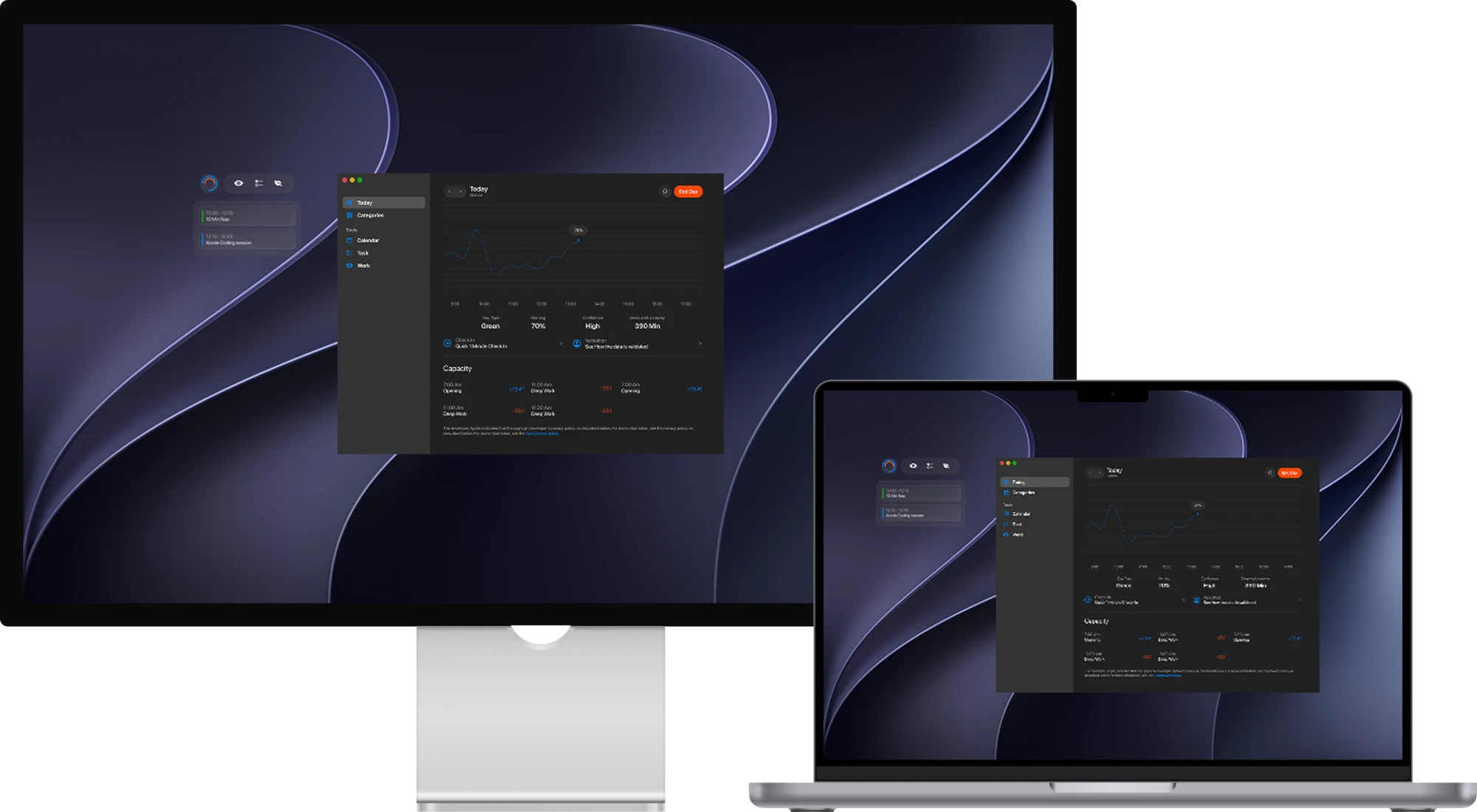
The Mac app moved forward on three fronts. In the first days of the month, the existing app gained recovery in the calendar, a focus session that ends on Completed or Reschedule, notifications in a bell on Today and the mini floating window, and its first production build was installed on 2 October. On the new backend, we built a test version of the app with 60 of the 61 features laid out like the Mac app, the calendar's guidance drawn right on the calendar, and Windows installers so the whole team can use it. The redesign advanced in Figma too, with the Categories pages drawn using Apple's own symbols and tools ready to build the remaining screens in light and dark. Then, on 30 October, we began a fresh native Mac app in SwiftUI, built to the Figma design and connected to the new cloud; its Today page is already working, with the notifications bell, End Day, Quick Check In and email-code sign-in. Each step brings the desktop app closer to the version our first users will run every day.
adarna.us gained 12 Health Library articles, a better phone layout and the September newsroom update.
Read the Articlesadarna.us kept pace with the company this month. On 7 October we published the September newsroom update and added twelve new articles to the Health Library, each about 2,000 words, from burnout and jet lag to heart rate recovery and walking speed as a vital sign. The same day the site became noticeably better on phones, with wider side margins, no sideways scrolling and a swipe hint on the menu, checked across fourteen kinds of page at three screen widths. The fourteen policy pages and the whole Health Library swapped their photos for slow, animated colour gradients that load faster and feel calmer, and the About page now shows our team on full-width cards. Behind the scenes, we designed an email footer that matches the website for every company email, and wrote the first copy for the desktop app's pages, starting with Today. Every update to Adarna and Aura Clarus continues to appear on adarna.us first, and the Health Library is the best place to read the research that shapes the product.