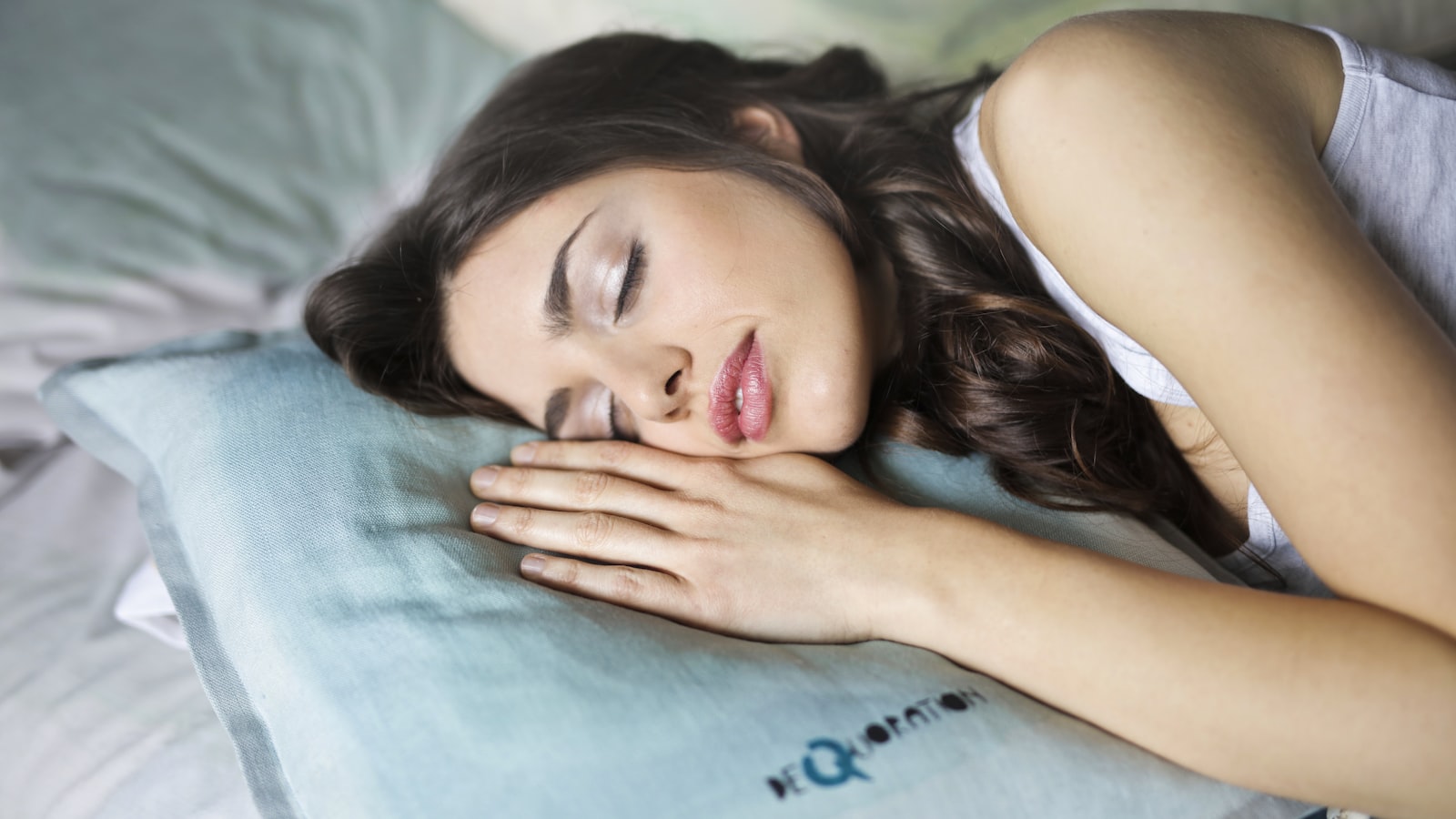
Every night, millions of people stop breathing in their sleep — dozens, sometimes hundreds of times — and wake each morning convinced they simply slept poorly. Sleep apnea is among the most common chronic conditions in the world, and also among the most invisible. Most of the people who have it do not know.
The mechanics are quietly violent. During sleep, the muscles that hold the upper airway open relax. In people with obstructive sleep apnea, the airway narrows or collapses entirely, and airflow stops despite continued effort to breathe. Oxygen levels fall. The brain, sensing the threat, jolts the body into a brief arousal to reopen the throat — a gasp, a snort, a shift in position — and breathing resumes. The sleeper rarely remembers any of it. Then the cycle repeats, again and again, for hours.
Each interruption is small. Their accumulation is not. Over years, the nightly oxygen swings and fragmented sleep place measurable strain on the heart, the blood vessels, the metabolism and the brain. Sleep apnea is not merely a nuisance that ruins rest; it is a cardiovascular and metabolic risk factor that happens to be largely treatable — once it is found. The challenge has always been finding it.
1. What sleep apnea actually is
Obstructive sleep apnea (OSA) is the repeated, partial or complete collapse of the upper airway during sleep. Clinicians describe these events with two terms. An apnea is a near-total cessation of airflow lasting at least ten seconds. A hypopnea is a partial reduction in airflow, also lasting at least ten seconds, accompanied by a drop in blood oxygen or a brief arousal from sleep. Both end the same way: a momentary awakening, often invisible to the sleeper, that restores breathing at the cost of restorative sleep.
The severity of OSA is captured by a single number, the apnea-hypopnea index, or AHI — the average count of apneas and hypopneas per hour of sleep. By widely used clinical thresholds, an AHI under 5 is considered normal, 5 to 15 is mild, 15 to 30 is moderate, and above 30 is severe. Someone with severe apnea may experience an airway event roughly every minute, all night long, with oxygen saturation repeatedly dipping well below its healthy resting baseline.
A different condition than central apnea
OSA is mechanical: the airway closes while the body still tries to breathe. A less common variant, central sleep apnea, is a signaling problem — the brain briefly stops sending the command to breathe at all. The two can coexist, but the overwhelming majority of cases, and the ones most relevant to wearable screening, are obstructive. Throughout this article, sleep apnea refers to the obstructive form unless stated otherwise.
2. The scale of an invisible epidemic
Sleep apnea is far more common than its public profile suggests. Large international analyses estimate that close to a billion adults worldwide have at least mild OSA, with several hundred million in the moderate-to-severe range that most clearly warrants treatment. It affects men more often than women, becomes more prevalent with age, and is strongly linked to excess weight — though lean people, including children and athletes, are by no means exempt.
What makes these numbers striking is how few of the affected know. Research has long suggested that a large majority of moderate-to-severe cases — by many estimates the great majority — remain undiagnosed. The reasons are structural. The defining symptoms occur during sleep, where the person cannot observe them. The daytime consequences — fatigue, low mood, poor concentration — are easily attributed to stress, age or a busy life. And confirming the diagnosis has traditionally required an overnight sleep study, a barrier of cost, access and inconvenience that quietly keeps people away.
The paradox of sleep apnea is that it is both extraordinarily common and largely hidden. A condition that strains the heart and brain night after night frequently goes unnoticed for years — not because it is subtle in its effects, but because its signs unfold while we are unconscious.
3. The symptoms hiding in plain sight
The classic nighttime signature is loud, habitual snoring punctuated by silences — and then a gasp, choke or snort as breathing resumes. Bed partners are often the first to notice, describing pauses that can be genuinely alarming to witness. Many people also wake repeatedly to urinate, sleep restlessly, or surface with a dry mouth.
The daytime picture is subtler and easier to dismiss. Excessive daytime sleepiness is the hallmark: dozing off while reading, in meetings, or — most dangerously — behind the wheel. Morning headaches, irritability, difficulty concentrating, low mood and a general sense of unrefreshing sleep are common. Because these symptoms creep in gradually and resemble the ordinary fatigue of modern life, they are routinely overlooked by patients and clinicians alike. Someone can spend a decade exhausted, never suspecting that the cause is a throat that closes every night.
4. Why it matters: the downstream risks
The danger of sleep apnea lies in what the nightly oxygen dips and fragmented sleep do over time. Each apnea triggers a surge of stress hormones, a spike in blood pressure and a strain on the cardiovascular system. Repeated thousands of times a month, this pattern reshapes long-term health.
Untreated OSA is independently associated with hypertension that resists medication, atrial fibrillation and other arrhythmias, heart failure, coronary artery disease and an elevated risk of stroke. The intermittent drops in oxygen and disrupted sleep also impair how the body handles glucose, contributing to insulin resistance and type 2 diabetes, and feed a self-reinforcing loop with weight gain. The metabolic and cardiovascular consequences are intertwined and compounding.
There is also an immediate, public danger. The profound daytime sleepiness of untreated apnea slows reaction time and impairs judgment, raising the risk of motor vehicle and workplace accidents. Sleep apnea is, in this sense, not only a private medical condition but a road-safety and occupational issue.
Conditions more common in people with untreated OSA
Relative association strength is illustrative; untreated OSA is linked to each of these conditions across large studies.
5. How wearables screen for sleep apnea
The breakthrough that brings sleep apnea out of hiding is that its physiological signature leaves traces a wearable can detect — without a wired laboratory and without the person doing anything but sleeping. The key is that an apnea is not a silent event inside the body. It produces a cascade of measurable changes, and modern sensors are built precisely to read them.
The signals an apnea leaves behind
The most telling is blood oxygen. When the airway closes, oxygen saturation falls; when breathing resumes, it climbs back. A night of apnea therefore produces a distinctive sawtooth of repeated desaturation dips. Wrist-worn pulse oximetry can track these dips overnight, and clustered, recurring drops are a strong flag for disordered breathing.
Heart rate adds a second dimension. Each arousal triggers a brief surge in heart rate as the nervous system reacts, producing a rhythmic acceleration-and-recovery pattern through the night. Heart-rate variability shifts in characteristic ways, reflecting the repeated stress responses. Respiratory rate, estimated by the device, fluctuates with the pauses and recoveries. And accelerometers capture the restlessness — the micro-movements and position changes that accompany each awakening, and the fact that apnea is often worse when sleeping on the back.
No single signal is conclusive on its own. Their power comes from combining them: when overnight oxygen dips, heart-rate surges, respiratory fluctuations and movement all align into the same repeating pattern, the likelihood of sleep-disordered breathing rises considerably. This is pattern recognition across a full night, repeated across many nights — something a once-a-year clinic visit can never observe.
6. Screening is not diagnosis
This distinction is the single most important thing to understand, and it deserves to be stated plainly. A wearable screens; it does not diagnose. What a device offers is a well-founded signal that something may be wrong and that the matter is worth pursuing — a prompt to act, not a verdict.
A formal diagnosis of sleep apnea, and the AHI score that grades its severity, comes from a sleep study. The reference standard is in-laboratory polysomnography, an overnight assessment that records brain activity, eye movement, muscle tone, airflow, breathing effort, oxygen and heart rhythm together. A validated home sleep apnea test offers a more accessible alternative for many patients. Either way, the confirmation, the severity grading and the treatment plan belong to a qualified clinician.
Think of a wearable as a smoke detector, not a fire inspector. It is exceptional at noticing that something is happening and telling you to investigate — and that early warning is precisely what closes the gap between a hidden condition and a treated one.
Used this way, the value is enormous. The greatest harm in sleep apnea comes from the years it spends undetected. A device that nudges someone toward a sleep study they would otherwise never have considered can compress that gap from a decade to a matter of weeks.
~1B
adults worldwide estimated to have at least mild OSA
≥10s
minimum duration that defines a single apnea event
>30
AHI events per hour marking severe sleep apnea
7. How sleep apnea is treated
The encouraging counterpart to the scale of the problem is that sleep apnea responds well to treatment, and the options span a spectrum from devices to behavior. For moderate-to-severe OSA, the first-line therapy remains continuous positive airway pressure, or CPAP — a bedside machine that delivers a gentle, steady stream of air through a mask to splint the airway open through the night. When tolerated and used consistently, CPAP can dramatically reduce apnea events and improve daytime alertness, blood pressure and quality of life.
Other approaches suit milder cases or those who cannot tolerate CPAP. Custom oral appliances, fitted by a dentist, reposition the lower jaw to keep the airway open. Because apnea is often worse when lying on the back, positional therapy — encouraging side-sleeping — can help selected patients. Weight loss is among the most powerful interventions: even a modest reduction in body weight can meaningfully lower AHI in people whose apnea is driven by excess weight. Avoiding alcohol and sedatives near bedtime, which relax the airway muscles, also helps. For specific anatomical cases, surgical options exist. The right combination is individual, and is best chosen with a sleep physician.
8. From a single night to continuous awareness
Sleep apnea is the clearest illustration of why continuous, passive monitoring matters. The condition is defined by what happens repeatedly, over hours, night after night — a pattern that is invisible to the person living it and unreachable by an annual physical. The only way to catch it early is to be measuring on the nights it is actually happening.
This is the role the Aura Clarus is designed to play. By tracking overnight blood oxygen, heart rate and heart-rate variability, respiratory rate and movement, night after night, it can surface the recurring desaturation dips and physiological signatures that suggest sleep-disordered breathing — and flag them so a person can act. It is built to notice patterns that no single night, and certainly no clinic visit, would reveal, and to do so quietly in the background of ordinary life.
The intent is deliberately modest and, we believe, more useful for it. The Aura Clarus does not diagnose sleep apnea and does not replace a sleep study. It fits earlier in the journey: it helps a person notice that their nights may not be as restful as they assume, and points them toward a clinician who can confirm what is happening and treat it. That shift — from discovering a serious condition by accident, often years too late, to being gently alerted to it while there is still time to act — is the heart of proactive health.
Few conditions capture the promise of everyday health monitoring as completely as sleep apnea: widespread, consequential, largely hidden, and highly treatable once found. The technology now exists to notice the warning signs in the place they actually occur — in your own bed, on your own nights — and to turn a decade of unexplained fatigue into a question worth asking your doctor. The science of catching it early is no longer the hard part. Paying attention is.
This article is published by Adarna Inc. for educational and informational purposes only. It does not constitute medical advice. Consult a qualified healthcare professional before making any health-related decisions.