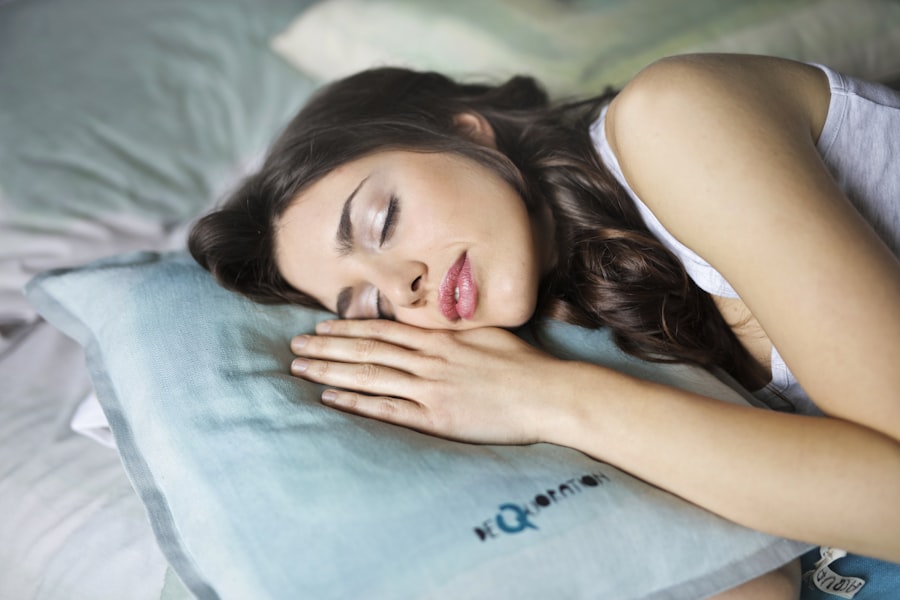
A well-timed nap does more for cognition and recovery than most people realize. Far from a sign of laziness, strategic napping is one of the most efficient tools the body has for restoring alertness, consolidating memory, and resetting the autonomic nervous system — and the science behind it is more precise than you might expect.
Humans are one of the few mammals that consolidate all their sleep into a single block. Most species sleep in shorter bouts spread across the day. Our own circadian biology still carries traces of this pattern — a natural dip in alertness that arrives in the early afternoon, regardless of what or whether you ate for lunch. This is not a flaw. It is a feature of the two-process model of sleep regulation, and understanding it is the first step toward using naps deliberately rather than accidentally.
The question is not whether naps work. Decades of research, from NASA flight decks to university laboratories, confirm that they do. The real questions are how long, when, and what to measure afterward. The answers turn napping from a guilty indulgence into a precise intervention.
1. Sleep Pressure and the Adenosine Story
Every hour you spend awake, a molecule called adenosine accumulates in your brain. Adenosine is a byproduct of neural energy consumption — as neurons fire and burn through adenosine triphosphate (ATP), adenosine builds up in the extracellular space, progressively binding to inhibitory receptors and dampening neural activity. This is the molecular basis of what sleep scientists call sleep pressure, or Process S in the two-process model of sleep regulation.
The longer you are awake, the more adenosine accumulates, and the stronger your drive to sleep becomes. During sleep, the brain clears adenosine efficiently, resetting the counter. This is why you feel refreshed after a good night of rest — adenosine levels have dropped back to baseline. Caffeine works by temporarily blocking adenosine receptors, masking the signal without actually clearing the molecule. The pressure is still there; you simply cannot feel it until the caffeine wears off.
A nap, even a brief one, partially clears accumulated adenosine. This is why a short sleep in the afternoon can restore alertness so effectively — it is not merely psychological. It is a biochemical reset. The degree of clearance depends on the duration and depth of the nap, which is why duration matters far more than most people assume.
2. The NASA Nap Studies
Some of the most compelling evidence for strategic napping comes from research conducted by NASA in the 1990s, studying long-haul pilots and astronauts. The findings were striking and have shaped operational policy in aviation ever since.
In the landmark 1995 study led by Mark Rosekind and colleagues, pilots on transpacific flights who were allowed a planned 40-minute rest period (which yielded an average of 25.8 minutes of actual sleep) showed a 34 percent improvement in reaction time and a 16 percent improvement in lapses of attention compared to the no-rest control group. These were not marginal gains. In an environment where microseconds of delayed reaction can be catastrophic, the nap group performed at a measurably higher level for the remainder of their duty period.
The NASA research also demonstrated that the benefits of napping were not limited to subjectively sleepy individuals. Even pilots who did not feel particularly tired showed measurable cognitive improvements after a brief nap, suggesting that adenosine accumulation impairs performance before we are consciously aware of it. This finding has been replicated in numerous subsequent studies across medical residents, shift workers, and military personnel — populations where sustained attention under fatigue is not optional.
A 26-minute nap improved pilot reaction time by 34 percent and reduced attention lapses by 16 percent. The performance gain lasted for the remainder of the duty period.
3. Nap Duration: Choosing the Right Length
Not all naps are equal, and longer is not always better. The relationship between nap duration and benefit is surprisingly non-linear, shaped by the architecture of sleep stages the brain moves through as a nap extends.
The 10-to-20-minute power nap
A nap of ten to twenty minutes is the most efficient format for most people in most situations. In this window, the brain typically enters stage 1 and stage 2 non-REM sleep — light sleep characterized by a slowing of neural oscillations and the appearance of sleep spindles, brief bursts of activity that play a role in memory consolidation and sensory gating. Stage 2 sleep partially clears adenosine and provides a genuine, measurable boost to alertness, working memory, and reaction time.
Crucially, a nap this short avoids entry into slow-wave sleep (stage 3), which is the deep sleep phase the brain resists being pulled out of. The result is a clean awakening with minimal grogginess. Research by Sara Mednick and others has shown that the alertness benefits of a 10-to-20-minute nap can last for two to three hours, making it a remarkably efficient investment of time.
The 30-to-60-minute danger zone
Naps in the thirty-to-sixty-minute range present a paradox. They are long enough for the brain to descend into slow-wave sleep but not long enough to complete a full sleep cycle. Waking from slow-wave sleep triggers sleep inertia — a period of impaired cognitive function, confusion, and intense grogginess that can last fifteen to thirty minutes or longer. During this window, performance is often worse than it was before the nap. For this reason, sleep researchers generally advise against naps in this duration unless the sleeper can afford a transition period before needing to perform.
The 90-minute full cycle nap
A nap of approximately ninety minutes allows the brain to complete a full sleep cycle: through stage 1, stage 2, slow-wave sleep, and into a period of REM sleep before naturally returning to lighter stages. Because the sleeper wakes from lighter sleep rather than deep sleep, a 90-minute nap typically produces minimal sleep inertia. It also provides the additional benefit of REM sleep, which is associated with emotional regulation, creative problem-solving, and procedural memory consolidation. The trade-off is time — ninety minutes is a substantial commitment, and for some individuals, a nap this long can interfere with nighttime sleep onset.
34%
Improvement in reaction time from a planned nap (NASA study)
10-20m
Optimal power nap duration for alertness without grogginess
90 min
Full sleep cycle nap with REM and minimal sleep inertia
4. Sleep Inertia: The Hidden Cost of Waking Wrong
Sleep inertia is the transient period of impaired performance and reduced alertness that occurs immediately after waking, particularly from deep slow-wave sleep. It is not simply feeling groggy. During sleep inertia, reaction time, decision-making ability, and working memory are measurably degraded — in some studies, to levels comparable to mild intoxication. The prefrontal cortex, responsible for executive function, is among the last brain regions to fully reactivate after deep sleep, which explains why complex judgment is especially compromised.
Sleep inertia typically lasts fifteen to thirty minutes but can persist longer depending on the depth of sleep at the time of waking, the individual's level of prior sleep deprivation, and circadian timing. For anyone who needs to perform immediately after waking — a surgeon, a pilot, a driver — sleep inertia is not merely uncomfortable. It is dangerous.
Strategies to minimize sleep inertia
The most reliable way to avoid sleep inertia is to control nap duration. Keeping naps under twenty minutes prevents descent into slow-wave sleep in most individuals. If a longer nap is necessary, aiming for a full ninety-minute cycle allows the brain to return to lighter sleep stages naturally. Other evidence-supported strategies include exposing yourself to bright light immediately upon waking, splashing cold water on the face to activate the sympathetic nervous system, and the "nappuccino" technique — drinking a cup of coffee immediately before a twenty-minute nap, so that the caffeine begins to take effect roughly as you wake. Because caffeine takes approximately twenty to thirty minutes to reach peak plasma levels, the timing aligns neatly with the end of a short nap.
5. What Happens to HRV and Alertness After a Nap
Heart rate variability — the variation in time between consecutive heartbeats — is one of the most accessible windows into autonomic nervous system balance. Higher HRV generally reflects greater parasympathetic (rest-and-digest) activity, better stress resilience, and stronger recovery capacity. Lower HRV is associated with fatigue, accumulated stress, and reduced adaptive capacity.
Research consistently shows that a well-timed nap produces a measurable shift in HRV. Studies on shift workers, athletes, and sleep-restricted populations have demonstrated that even a short nap increases the high-frequency component of HRV — the component most directly tied to parasympathetic activation — while reducing sympathetic dominance. In practical terms, the body moves from a state of accumulated stress toward a state of recovery. This is not a subtle effect. In some studies, post-nap HRV improvements are comparable to what is seen after a moderate recovery session.
Subjective alertness follows a similar trajectory. The Stanford Sleepiness Scale and the Karolinska Sleepiness Scale, both widely used in fatigue research, consistently show significant improvements after naps of appropriate duration. More importantly, objective measures — psychomotor vigilance testing, sustained attention tasks, and error rates in simulated work — confirm that the subjective feeling of restored alertness reflects a genuine improvement in cognitive capacity, not merely a change in mood.
A short nap shifts the autonomic nervous system toward parasympathetic recovery. Post-nap HRV improvements are, in some studies, comparable to those seen after a dedicated recovery session.
6. Timing Naps With Your Circadian Rhythm
The two-process model of sleep regulation describes two independent forces that together determine when you feel alert and when you feel sleepy. Process S is the homeostatic sleep pressure driven by adenosine accumulation. Process C is the circadian alerting signal — the roughly 24-hour internal clock governed by the suprachiasmatic nucleus in the hypothalamus, entrained primarily by light exposure.
These two processes interact in a way that creates a natural window for napping. In the early afternoon, typically between 1:00 and 3:00 PM for people who follow a conventional sleep schedule, Process S has built up enough pressure to create noticeable sleepiness, while Process C has not yet ramped up its afternoon alerting signal. This produces the well-documented post-lunch dip — a trough in alertness that is circadian in origin and largely independent of food intake. Napping during this window aligns with the body's natural physiology, making it easier to fall asleep quickly and wake without excessive inertia.
Napping too late in the day is the most common mistake. A nap after 4:00 PM, particularly a longer one, can reduce homeostatic sleep pressure enough to delay nighttime sleep onset, fragment nighttime sleep architecture, and undermine the deep slow-wave sleep that occurs predominantly in the first half of the night. For most adults, the ideal napping window closes by mid-afternoon. Individuals who work shifts or follow non-standard schedules need to adjust this window relative to their own circadian phase rather than the clock, which is where continuous monitoring of sleep timing and quality becomes particularly valuable.
7. Wearables and the Validation of Nap Quality
One of the practical challenges of napping has always been uncertainty. Did I actually fall asleep? How deep did I go? Did the nap help, or did I wake at the wrong time? These questions were historically unanswerable outside a sleep laboratory equipped with polysomnography. Modern wearable sensors are beginning to change this.
Devices that continuously monitor heart rate, heart rate variability, motion, and skin temperature can now detect sleep onset with reasonable accuracy, distinguish between light and deep sleep stages through changes in heart rate dynamics and movement patterns, and provide post-nap feedback on duration and estimated sleep depth. While no wrist-worn sensor matches the precision of clinical-grade EEG for sleep staging, the practical value lies not in perfect classification but in trend visibility — the ability to see, over weeks and months, whether your naps are consistently reaching restorative sleep stages, whether your post-nap HRV improves, and whether nap timing correlates with better or worse nighttime sleep.
This is the kind of feedback loop that turns napping from guesswork into practice. A device like Aura Clarus, by tracking heart rate, HRV, and sleep architecture continuously, can help a user understand not just that they napped, but whether the nap was physiologically effective — whether it reached stage 2, whether HRV shifted toward recovery, and whether the timing supported rather than disrupted their broader sleep rhythm. Over time, this data builds a personal profile of napping that is far more useful than any generic recommendation.
The goal is not to over-engineer rest. It is to make visible what the body already knows but cannot easily communicate: that a well-placed nap at the right duration, at the right time, is one of the simplest and most powerful tools available for sustaining cognitive performance and physiological recovery across the day.
Napping is not a luxury or a concession to weakness. It is a physiological strategy with decades of rigorous evidence behind it. The science is clear on the mechanisms — adenosine clearance, sleep stage architecture, autonomic rebalancing — and increasingly clear on the practice: keep it short or make it a full cycle, time it with your circadian trough, and measure the outcome. In a culture that often conflates rest with idleness, the strategic nap stands as a quiet correction — a reminder that the brain performs best not when it is driven hardest, but when it is allowed to recover intelligently.
This article is published by Adarna Inc. for educational and informational purposes only. It does not constitute medical advice. Consult a qualified healthcare professional before making any health-related decisions.